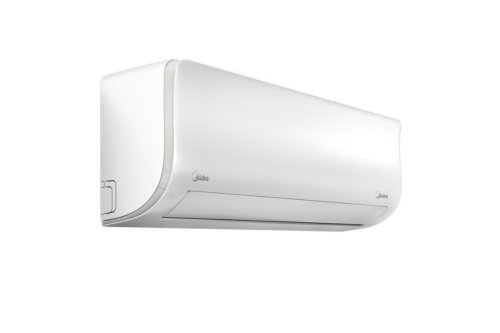
Choosing the correct air conditioner size is one of the most important decisions you can make when buying a new cooling system. A Midea AC that is too small may struggle to maintain a comfortable temperature, while an oversized unit can cost more to purchase and may not provide the ideal cooling performance for the space.
For homeowners, tenants, offices, shops, and commercial properties in the UAE, understanding Midea AC tonnage can make the buying process much easier.
Midea air conditioners are available in different cooling capacities, with models designed for different room sizes and applications. Current Midea specifications include capacities such as 9,000, 12,000, 18,000, and 24,000 BTU/h across various systems, while larger commercial systems are available at substantially higher capacities.
However, room area alone does not determine the correct AC size. Ceiling height, insulation, sunlight exposure, occupancy, windows, room usage, and heat generated by appliances can all affect cooling requirements. Midea’s own sizing guidance recommends considering these factors when determining the required capacity.
What Does Midea AC Tonnage Mean?
When people talk about AC tonnage, they are referring to the cooling capacity of the air conditioner.
In air conditioning, one ton does not refer to the physical weight of the unit. It is a measurement of cooling capacity.
As a general conversion:
1 ton of cooling = approximately 12,000 BTU per hour
This means:
| AC Tonnage | Approximate Cooling Capacity |
| 0.75 ton | 9,000 BTU/h |
| 1 ton | 12,000 BTU/h |
| 1.5 tons | 18,000 BTU/h |
| 2 tons | 24,000 BTU/h |
| 2.5 tons | 30,000 BTU/h |
| 3 tons | 36,000 BTU/h |
| 4 tons | 48,000 BTU/h |
| 5 tons | 60,000 BTU/h |
Actual Midea model capacities can vary, so buyers should always check the technical specifications for the particular model rather than assuming that every model follows the same range.
For example, Midea’s current product documentation lists 12,000 BTU/h, 18,000 BTU/h, and 24,000 BTU/h capacities for several residential and light commercial systems.
Why Choosing the Right Midea AC Tonnage Matters
Selecting the correct capacity is important for comfort, efficiency, and long-term performance.
An AC That Is Too Small
If the cooling capacity is insufficient for the room, the air conditioner may have to operate for extended periods to reach the desired temperature.
This can result in:
- Slow cooling
- Difficulty maintaining the set temperature
- Longer compressor operation
- Increased electricity consumption
- Greater operating stress
- Reduced comfort during very hot weather
This can become especially noticeable during Dubai’s hottest periods when outdoor temperatures are high.
An AC That Is Too Large
Choosing a much larger AC does not automatically mean better cooling.
An oversized system may cool the room very quickly but may not operate in the way you expect. Depending on the system and conditions, frequent cycling can affect comfort and efficiency.
An oversized AC can also mean spending more money on equipment than necessary.
The goal is therefore not to choose the biggest Midea AC available. The goal is to choose the capacity that matches the property’s actual cooling requirements.
Midea AC Tonnage Guide by Room Size
Room size is a useful starting point when selecting an air conditioner, but it should not be the only consideration.
The following table can be used as a general starting guide:
| Approximate Room Size | Suggested Midea AC Capacity |
| Up to 100 sq. ft. | 0.75 ton / around 9,000 BTU |
| 100 to 150 sq. ft. | 1 ton / around 12,000 BTU |
| 150 to 250 sq. ft. | 1.5 tons / around 18,000 BTU |
| 250 to 350 sq. ft. | 2 tons / around 24,000 BTU |
| 350 to 450 sq. ft. | 2.5 tons / around 30,000 BTU |
| 450 to 600 sq. ft. | 3 tons / around 36,000 BTU |
These figures should be treated as preliminary estimates rather than a professional cooling load calculation.
For comparison, Midea’s own general sizing resources emphasize that factors such as ceiling height, insulation, occupancy, and sunlight exposure can change the required BTU capacity.
For a Dubai property, these additional factors can be particularly important.
How to Calculate Your Room Size
Before choosing your Midea AC tonnage, start by calculating the floor area.
The basic formula is:
Room Area = Length × Width
For example, if your room is 15 feet long and 12 feet wide:
15 × 12 = 180 square feet
A room of approximately 180 square feet could fall within the range where a 1.5 ton AC may be considered, but the final selection should also take into account ceiling height, sunlight, insulation, windows, occupants, and the room’s purpose.
For irregularly shaped rooms, divide the room into smaller rectangular sections, calculate each area separately, and then add them together.
Midea AC Tonnage for Bedrooms
Bedrooms generally have lower heat loads than kitchens, offices with multiple computers, or rooms with large numbers of occupants.
A small bedroom may require a lower capacity Midea AC, while a large master bedroom with large windows and direct sunlight may require more cooling.
For example:
Small Bedroom
A room up to around 100 square feet may potentially suit a 0.75-ton or approximately 9,000 BTU unit, depending on the conditions.
Medium Bedroom
A room between approximately 100 and 150 square feet may often fall around the 1-ton or 12,000 BTU range.
Large Bedroom
A larger bedroom of approximately 150 to 250 square feet may require around 1.5 tons or 18,000 BTU, subject to the property’s actual heat load.
These are starting points, not fixed rules.
Midea AC Tonnage for Living Rooms
Living rooms often have higher cooling requirements because they may be larger, have more occupants, and contain larger windows.
An open plan living and dining area can also require substantially more capacity than a separate bedroom of the same width.
For example, a 250 square foot living room may potentially fall around the 2 ton range, while a much larger open plan space could require a higher capacity or a different AC configuration.
The right approach is to assess the complete space rather than selecting an AC based only on a general room-size chart.
Midea AC Tonnage for Offices
Office cooling requirements can be different from residential spaces.
Computers, monitors, printers, lighting, and multiple employees all generate heat.
An office that appears small based on floor area may therefore require more cooling capacity than a bedroom of the same size.
When selecting a Midea AC for an office, consider:
- Number of employees
- Computers and electronic equipment
- Working hours
- Window exposure
- Ceiling height
- Number of rooms
- Internal heat sources
- Building insulation
For larger offices, a professional HVAC assessment may be more appropriate than using a simple room-size chart.
Midea AC Tonnage for Shops and Commercial Spaces
Retail shops and commercial properties can have additional cooling requirements because doors may open frequently, increasing the exchange of outdoor and indoor air.
Display lighting, refrigeration equipment, customers, staff, and large glass fronts can also increase the heat load.
For these applications, choosing the correct Midea AC tonnage requires more than multiplying the floor area by a basic rule.
Depending on the property, a supplier may recommend split, cassette, ducted, floor-standing, or larger commercial systems.
Midea’s product range includes different cooling capacities and system configurations for residential and commercial applications.
Factors That Affect Midea AC Tonnage
Room size is only one part of AC sizing.
Here are the most important factors to consider.
1. Ceiling Height
A room with a higher ceiling contains more air that needs to be conditioned.
Midea notes that ceiling height can affect the required capacity, with its sizing guidance specifically recommending adjustments for ceilings above standard height.
If your room has a high ceiling, tell your AC supplier before purchasing.
2. Sunlight Exposure
Rooms exposed to strong direct sunlight can become significantly warmer.
A west-facing room may receive substantial afternoon heat, particularly if it has large windows.
In such situations, the cooling requirement may be higher than the room-size calculation alone suggests.
3. Windows and Glass Areas
Large windows can increase heat gain.
Properties with floor-to-ceiling glass may therefore need a different cooling capacity from properties with smaller windows.
Window orientation, glazing, curtains, and shading can all influence the indoor heat load.
4. Insulation
Insulation helps reduce heat transfer between the interior and exterior of a building.
A well-insulated room may retain conditioned air more effectively, while poor insulation can make cooling more difficult.
If your property has older construction or significant heat transfer through walls and ceilings, the supplier should know about it before recommending the AC.
5. Number of Occupants
People generate heat.
A bedroom occupied by one or two people has a different heat load from a meeting room containing ten or fifteen people.
This becomes particularly important for offices, restaurants, classrooms, and commercial spaces.
6. Appliances and Electronics
Televisions, computers, refrigerators, lighting, cooking equipment, and other electrical devices can contribute to indoor heat.
A home office with multiple computers may therefore require more cooling than an empty room of the same size.
7. Room Usage
A kitchen, server room, office, bedroom, and living room do not have identical cooling requirements.
The intended use of the room should be considered when selecting Midea AC tonnage.
8. Floor Level and Roof Exposure
Top-floor rooms can experience additional heat gain through the roof.
If a room is directly beneath a roof that receives strong sunlight, its cooling requirement may be higher than that of an interior room surrounded by conditioned spaces.
Is 1 Ton Midea AC Enough for a Bedroom?
A 1-ton Midea AC provides approximately 12,000 BTU/h of nominal cooling capacity.
Whether it is enough depends on the bedroom.
A standard bedroom of moderate size with reasonable insulation, normal ceiling height, limited direct sunlight, and typical occupancy may be suitable for a 1-ton unit.
However, a larger bedroom with high ceilings, extensive glazing, direct sunlight, or poor insulation may require a larger capacity.
The correct answer should therefore come from the room’s actual cooling requirements rather than the tonnage label alone.
Is 1.5 Ton Midea AC Good for a Medium Room?
A 1.5-ton Midea AC is approximately equivalent to 18,000 BTU/h.
It may be suitable for medium to larger rooms depending on their size and heat load.
Midea’s current product documentation includes 18,000 BTU/h models, demonstrating that this is a common capacity category in its AC range.
Before choosing it, consider the room’s dimensions, ceiling height, windows, sunlight exposure, insulation, and occupancy.
Is 2 Ton Midea AC Suitable for a Large Room?
A 2-ton AC is approximately 24,000 BTU/h.
It can be suitable for larger rooms, living areas, offices, and certain commercial applications.
However, a 2-ton unit should not automatically be selected simply because a room is described as “large.”
A large open plan area may require a detailed cooling assessment and potentially multiple indoor units or a different system design.
Midea’s current catalogue includes 24,000 BTU/h systems across several configurations.
Midea AC Tonnage vs BTU: What’s the Difference?
Tonnage and BTU describe the same basic concept from different perspectives.
Tonnage is commonly used in the HVAC industry to describe cooling capacity.
BTU/h gives a more precise numerical representation of that cooling capacity.
For example:
1 ton ≈ 12,000 BTU/h
1.5 tons ≈ 18,000 BTU/h
2 tons ≈ 24,000 BTU/h
When shopping for a Midea AC, you may see the capacity presented as BTU/h rather than tons.
Always check the manufacturer’s specifications for the exact cooling capacity of the model you are considering.
Should You Choose a Higher Midea AC Tonnage for Dubai?
Dubai’s hot climate makes proper AC sizing particularly important. However, the solution is not simply to purchase a larger AC. Instead, the cooling load should reflect the actual property conditions.
A higher capacity may be appropriate when the room has:
- Large areas of direct sunlight
- High ceilings
- Poor insulation
- Large windows
- High occupancy
- Significant internal heat sources
- Roof exposure
- Heavy commercial usage
But unnecessarily increasing capacity can also mean paying more for equipment without receiving proportional benefits.
The objective should be correct sizing, not maximum sizing.
Midea Inverter AC and Tonnage
Midea offers inverter AC systems in various capacities.
An inverter compressor can vary its operation according to cooling demand. This makes correct sizing important because the system needs to operate within a suitable capacity range for the room.
Midea’s current product documentation includes inverter models with capacities ranging from smaller residential units through larger systems.
When choosing an inverter Midea AC, consider both the nominal capacity and the model’s operating range.
For example, one current Midea multi split specification lists a 12,000 BTU/h unit with a cooling range of approximately 5,400 to 14,250 BTU/h, while its 18,000 BTU/h model has a listed range of approximately 11,700 to 20,700 BTU/h.
This illustrates why buyers should look at the complete specification rather than only the tonnage label.
Common Mistakes When Choosing Midea AC Tonnage
Choosing Based Only on Room Size
Room area is useful, but it does not account for sunlight, ceiling height, insulation, occupancy, or equipment.
Buying the Largest AC Available
More capacity does not automatically mean better performance.
Ignoring Ceiling Height
High ceilings can increase the cooling requirement.
Forgetting About Sun Exposure
A room exposed to intense afternoon sunlight can have a greater heat load.
Comparing Only AC Prices
The cheapest AC is not necessarily the best value if it is incorrectly sized for the property.
Ignoring Installation
Correct installation is essential for the system to perform as intended.
Selecting a Model Without Checking Specifications
Different Midea AC models can have different capacities, technologies, efficiency levels, and operating ranges.
Why Work With a Professional Midea AC Supplier?
Selecting the correct Midea AC tonnage can be difficult when you are unfamiliar with HVAC sizing.
A professional Midea AC supplier can help you compare models, understand capacity options, and select equipment according to your property’s requirements.
AC Supplier UAE states that it supplies Midea air conditioners across Dubai, Sharjah, Ajman, Abu Dhabi, and other areas of the UAE. Its listed Midea solutions include wall-mounted split ACs, floor-standing units, window units, and ducted systems.
Working with a supplier can be particularly useful for larger homes and commercial projects where simple room-size calculations may not be sufficient.
How to Choose the Right Midea AC Tonnage: Step by Step
Follow these steps before buying.
Step 1: Measure the Room
Record the length, width, and ceiling height.
Step 2: Calculate the Floor Area
Multiply length by width to determine the approximate floor area.
Step 3: Check Windows
Note the number, size, and orientation of windows.
Step 4: Assess Sun Exposure
Determine whether the room receives strong direct sunlight.
Step 5: Consider Insulation
Poor insulation can increase cooling requirements.
Step 6: Count Occupants
Estimate the normal number of people using the space.
Step 7: Identify Heat Sources
Consider computers, appliances, lighting, and other equipment.
Step 8: Choose a Suitable Capacity Range
Use room size as a starting point and adjust based on the property’s conditions.
Step 9: Compare Midea Models
Check the actual BTU/h rating, inverter technology, efficiency, dimensions, and operating specifications.
Step 10: Get Professional Advice
For larger or unusual spaces, ask a qualified supplier or HVAC professional to assess the cooling requirement.
Final Midea AC Tonnage Guide
Choosing the correct Midea AC tonnage is about matching cooling capacity to the actual heat load of your room.
As a general starting point:
- 0.75 ton: Around 9,000 BTU/h for smaller spaces
- 1 ton: Around 12,000 BTU/h for small to moderate rooms
- 1.5 tons: Around 18,000 BTU/h for medium to larger rooms
- 2 tons: Around 24,000 BTU/h for larger rooms
- 2.5 tons: Around 30,000 BTU/h for larger spaces with higher cooling requirements
- 3 tons: Around 36,000 BTU/h for substantially larger areas
These are general categories, not universal sizing rules.
Midea itself recommends considering room size alongside factors such as ceiling height, insulation, occupancy, and sunlight exposure when estimating the required cooling capacity.
For larger homes, villas, offices, shops, and commercial properties, a professional cooling load assessment is preferable to relying on a basic tonnage chart.
Final Thoughts
Finding the right Midea AC tonnage is essential for achieving comfortable and efficient cooling. Although room size provides a useful starting point, the correct AC capacity also depends on ceiling height, insulation, sunlight, windows, occupants, appliances, building construction, and how the room is used.
A 1-ton Midea AC may be suitable for one room but insufficient for another room of a similar size if the second space receives significantly more heat. Likewise, choosing a much larger unit does not automatically guarantee better cooling.
Before purchasing, calculate your room dimensions, consider the property’s heat load, compare the available Midea models, and check their actual BTU/h specifications.
If you are unsure which model is appropriate, speaking with a professional Midea AC supplier can help you compare suitable options and avoid the common mistake of choosing an AC that is either undersized or unnecessarily oversized. At AC Supplier, we can help you select a suitable Midea AC based on your cooling requirements, room size, and usage needs. Contact us today for professional guidance and assistance in choosing the right cooling solution.
Frequently Asked Questions
What is Midea AC tonnage?
Midea AC tonnage refers to the cooling capacity category of an air conditioner. As a general conversion, 1 ton is approximately 12,000 BTU/h, while 1.5 tons is approximately 18,000 BTU/h and 2 tons is approximately 24,000 BTU/h.
How many BTUs is a 1 ton Midea AC?
A 1 ton Midea AC is approximately 12,000 BTU/h. Always check the specific product’s technical specifications because exact model capacities can vary.
What Midea AC tonnage do I need for a bedroom?
It depends on the bedroom’s size and heat load. A small bedroom may require around 0.75 ton, while a medium or larger bedroom may require 1 to 1.5 tons. Sunlight, ceiling height, insulation, and occupancy should also be considered.
Is 1.5 ton Midea AC enough for a living room?
A 1.5 ton Midea AC provides approximately 18,000 BTU/h and may suit a medium sized living room. However, larger open plan rooms or spaces with high heat gain may require greater capacity.
Is 2 ton Midea AC suitable for a large room?
A 2 ton unit provides approximately 24,000 BTU/h and may be suitable for larger rooms. The final choice depends on room dimensions, ceiling height, sunlight, insulation, occupancy, and other heat sources.
Does room size determine Midea AC tonnage?
Room size is an important starting point but does not determine the required tonnage by itself. Midea recommends considering factors including ceiling height, insulation, occupancy, and sunlight exposure.
Is a higher tonnage Midea AC always better?
No. An oversized AC can cost more and may not operate as efficiently or comfortably as a correctly sized system. The goal is to match capacity to the property’s actual cooling requirement.
Does Dubai’s hot weather affect Midea AC sizing?
Yes. Outdoor temperature, sunlight, building insulation, windows, roof exposure, and indoor heat sources can all influence cooling requirements. A professional assessment is recommended for larger or more complex spaces.
Should I choose an inverter Midea AC based only on tonnage?
No. Consider the model’s actual cooling capacity, operating range, efficiency, features, installation requirements, and suitability for your property. Midea’s specifications show that different models can have different capacity ranges.
Where can I get help choosing Midea AC tonnage in the UAE?
A professional Midea AC supplier can help you compare suitable capacities and models based on your room or property’s requirements. AC Supplier UAE states that it supplies Midea AC solutions across Dubai and other UAE locations.